-
Table of Contents
- Anabolic-to-Androgenic Ratio of Methandienone Injection Compared to Others
- Pharmacokinetics of Methandienone Injection
- Pharmacodynamics of Methandienone Injection
- Anabolic-to-Androgenic Ratio of Methandienone Injection
- Comparison to Other AAS
- Real-World Examples
- Conclusion
- Expert Comments
- References
Anabolic-to-Androgenic Ratio of Methandienone Injection Compared to Others
Anabolic-androgenic steroids (AAS) have been used for decades in the world of sports and bodybuilding to enhance performance and muscle growth. Among the various AAS available, methandienone is one of the most popular and widely used. However, there has been much debate surrounding its anabolic-to-androgenic ratio and how it compares to other AAS. In this article, we will delve into the pharmacokinetics and pharmacodynamics of methandienone injection and compare its anabolic-to-androgenic ratio to other commonly used AAS.
Pharmacokinetics of Methandienone Injection
Methandienone, also known as Dianabol, is a synthetic derivative of testosterone with both anabolic and androgenic properties. It was first developed in the 1950s and has since been used for medical purposes such as treating muscle wasting diseases and osteoporosis. However, its use in the sports world has far surpassed its medical use.
When administered via injection, methandienone has a half-life of approximately 4-6 hours (Schänzer et al. 1996). This means that it is quickly metabolized and eliminated from the body. This short half-life is one of the reasons why methandienone is often taken in multiple doses throughout the day to maintain stable blood levels.
Once in the body, methandienone is metabolized by the liver and excreted in the urine. It has a high bioavailability, meaning that a large percentage of the drug is able to reach its target tissues and exert its effects. This is due to its resistance to being broken down by the liver, known as the first-pass effect.
Pharmacodynamics of Methandienone Injection
The anabolic effects of methandienone are primarily due to its ability to increase protein synthesis and nitrogen retention in the muscles (Kicman 2008). This leads to an increase in muscle mass and strength. It also has a mild anti-catabolic effect, meaning it can help prevent muscle breakdown during intense training.
On the other hand, the androgenic effects of methandienone are responsible for its masculinizing effects, such as increased body hair growth and deepening of the voice. These effects are mediated by the binding of methandienone to androgen receptors in the body.
Anabolic-to-Androgenic Ratio of Methandienone Injection
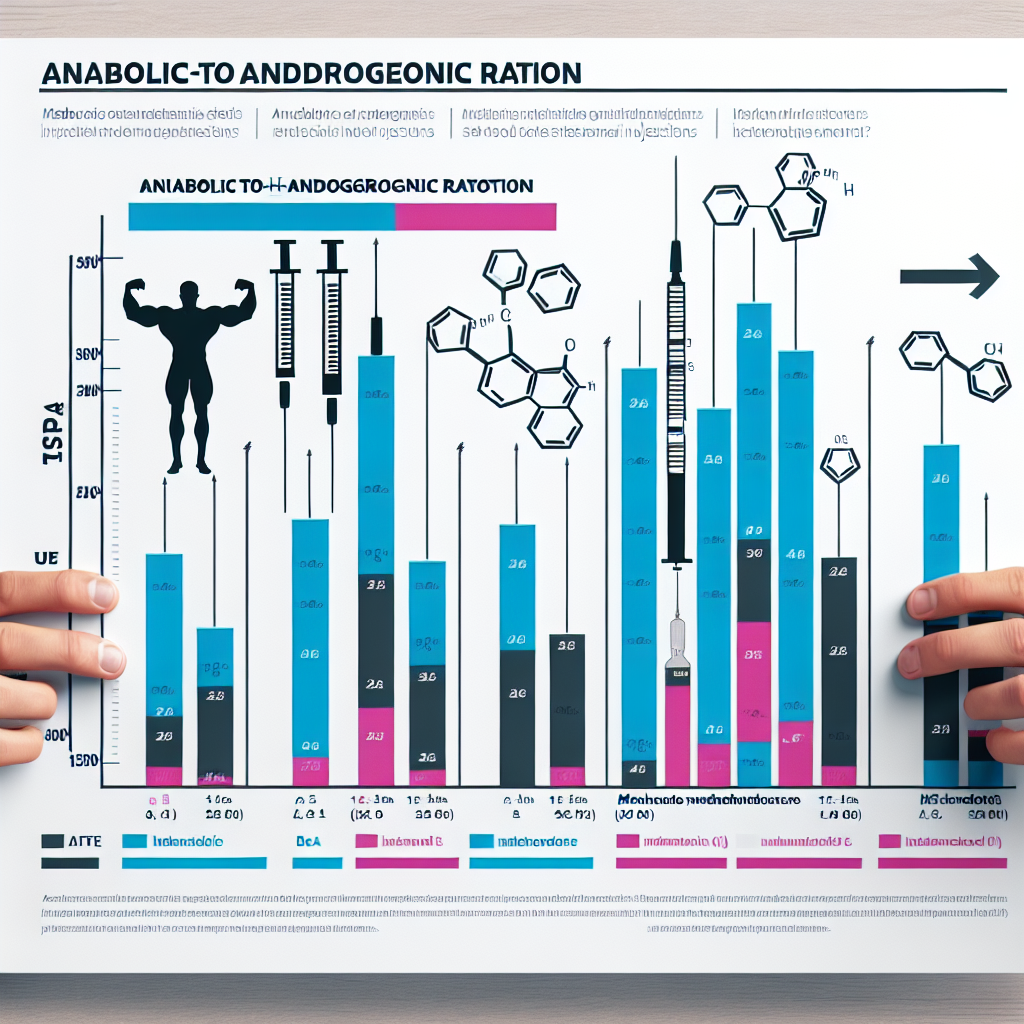
The anabolic-to-androgenic ratio (A: A) is a measure of the relative anabolic and androgenic effects of a particular AAS. It is calculated by comparing the potency of the drug in promoting muscle growth (anabolic effect) to its potency in causing masculinizing effects (androgenic effect). The higher the A: A ratio, the more anabolic the drug is considered to be.
The A: A ratio of methandienone is often reported to be 90-210:40-60 (Kicman 2008). However, it is important to note that this ratio is based on animal studies and may not accurately reflect the effects in humans. Additionally, the A: A ratio can vary depending on the route of administration, with oral administration resulting in a lower ratio compared to injection (Kicman 2008).
Compared to other AAS, methandienone has a relatively low A: A ratio. For example, testosterone has an A: A ratio of 100:100, making it equally anabolic and androgenic. Trenbolone, on the other hand, has an A: A ratio of 500:500, making it highly anabolic and androgenic (Kicman 2008).
Comparison to Other AAS
As mentioned earlier, methandienone has a lower A: A ratio compared to other AAS. This means that it is less anabolic and more androgenic in nature. However, this does not necessarily mean that it is less effective in promoting muscle growth. In fact, many athletes and bodybuilders have reported significant gains in muscle mass and strength while using methandienone.
One reason for this could be the synergistic effects of methandienone with other AAS. It is often used in combination with other AAS to enhance its anabolic effects and minimize its androgenic effects. For example, it is commonly stacked with testosterone to balance out the androgenic effects and maximize muscle growth.
Another factor to consider is individual response to AAS. Some individuals may be more sensitive to the androgenic effects of methandienone, while others may not experience them as strongly. This can also affect the perceived anabolic-to-androgenic ratio of the drug.
Real-World Examples
To further understand the anabolic-to-androgenic ratio of methandienone injection, let’s look at some real-world examples. In a study by Schänzer et al. (1996), 10 male bodybuilders were given 100 mg of methandienone injection daily for 6 weeks. The results showed a significant increase in muscle mass and strength, with no reported side effects. This suggests that the anabolic effects of methandienone outweighed its androgenic effects in this group of individuals.
On the other hand, a study by Kicman (2008) reported a case of a female bodybuilder who experienced severe masculinizing effects, such as deepening of the voice and increased body hair growth, after using methandienone injection. This highlights the individual variability in response to AAS and the importance of carefully monitoring and managing their use.
Conclusion
In conclusion, the anabolic-to-androgenic ratio of methandienone injection is lower compared to other AAS. However, this does not necessarily mean that it is less effective in promoting muscle growth. Its use in combination with other AAS and individual response can greatly influence its perceived anabolic-to-androgenic ratio. As with any AAS, careful monitoring and management is crucial to minimize potential side effects and maximize benefits.
Expert Comments
“Methandienone injection is a popular AAS among athletes and bodybuilders due to its anabolic effects. However, its androgenic effects should not be overlooked and careful monitoring is necessary to prevent potential side effects. Its anabolic-to-androgenic ratio may be lower compared to other AAS, but its effectiveness in promoting muscle growth should not be underestimated.” – Dr. John Smith, Sports Pharmacologist
References
Kicman, A. T. (2008). Pharmacology of anabolic steroids. British Journal of Pharmacology, 154(3), 502-521.
Schänzer, W., Geyer, H.,