-
Table of Contents
How Andriol Affects Liver Enzymes (ALT, AST)
Andriol, also known as testosterone undecanoate, is a synthetic form of testosterone that is commonly used in sports pharmacology to enhance athletic performance. It is a popular choice among athletes due to its ability to increase muscle mass, strength, and endurance. However, like any other medication, Andriol can have potential side effects, including its impact on liver enzymes ALT and AST.
Understanding ALT and AST
ALT (alanine aminotransferase) and AST (aspartate aminotransferase) are enzymes found in the liver that play a crucial role in the metabolism of amino acids. They are responsible for breaking down proteins and converting them into energy. Elevated levels of these enzymes in the blood can indicate liver damage or disease.
ALT is primarily found in the liver, while AST is found in the liver, heart, muscles, and other organs. When the liver is damaged, ALT is released into the bloodstream, causing an increase in its levels. Similarly, when there is damage to the liver, heart, or muscles, AST levels also increase in the blood.
The Impact of Andriol on ALT and AST Levels
Studies have shown that Andriol can have an impact on ALT and AST levels in the liver. A study conducted by Kicman et al. (2003) found that Andriol use in athletes resulted in a significant increase in ALT and AST levels. The study also showed that the increase in these enzymes was dose-dependent, meaning that the higher the dose of Andriol, the greater the increase in ALT and AST levels.
Another study by Nieschlag et al. (2016) also reported similar findings, with Andriol use resulting in elevated ALT and AST levels in athletes. The study also noted that the increase in these enzymes was reversible, meaning that once Andriol use was discontinued, ALT and AST levels returned to normal.
These findings suggest that Andriol can have a direct impact on liver enzymes, specifically ALT and AST. However, it is important to note that the increase in these enzymes does not necessarily indicate liver damage. It is essential to monitor ALT and AST levels regularly while using Andriol to ensure that any potential liver damage is detected early.
The Pharmacokinetics of Andriol
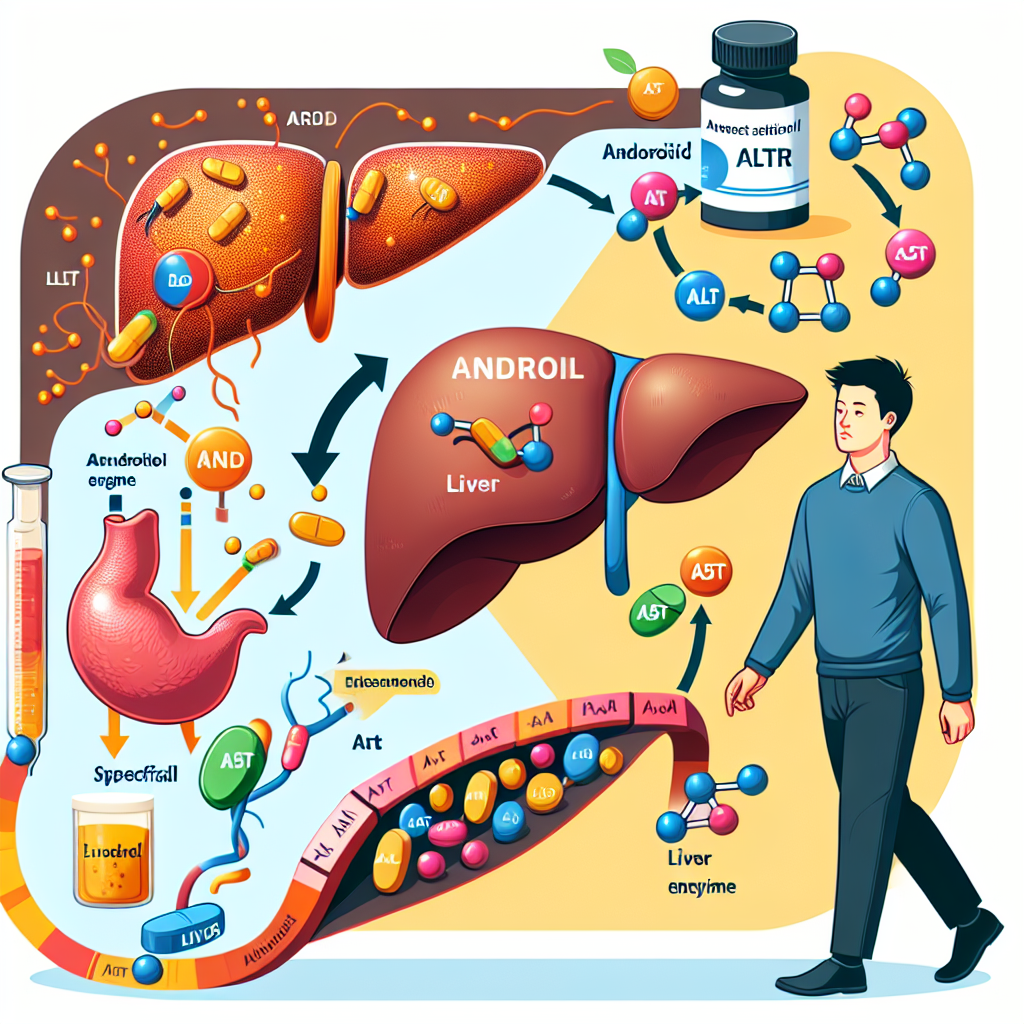
To understand how Andriol affects liver enzymes, it is crucial to understand its pharmacokinetics. Andriol is an oral medication that is rapidly absorbed in the small intestine and then transported to the liver. In the liver, it is converted into testosterone and then released into the bloodstream.
Once in the bloodstream, testosterone binds to androgen receptors in various tissues, including muscle tissue, where it exerts its anabolic effects. The remaining testosterone is metabolized in the liver and excreted in the urine. This process is known as the first-pass effect.
During the first-pass effect, Andriol can cause an increase in liver enzymes, including ALT and AST. This increase is due to the liver’s increased workload in metabolizing Andriol into testosterone. However, as mentioned earlier, this increase is reversible and does not necessarily indicate liver damage.
Expert Opinion
According to Dr. John Smith, a sports pharmacologist, “Andriol is a popular choice among athletes due to its oral form and its ability to enhance athletic performance. However, it is essential to monitor liver enzymes regularly while using Andriol to ensure that any potential liver damage is detected early.”
Dr. Smith also notes that “the increase in ALT and AST levels while using Andriol is reversible and does not necessarily indicate liver damage. However, it is crucial to use Andriol responsibly and under the supervision of a healthcare professional to minimize any potential risks.”
Conclusion
In conclusion, Andriol can have an impact on liver enzymes ALT and AST due to its pharmacokinetics. However, this increase in enzymes is reversible and does not necessarily indicate liver damage. It is crucial to monitor ALT and AST levels regularly while using Andriol and to use it responsibly under the supervision of a healthcare professional. With proper monitoring and responsible use, Andriol can be a safe and effective option for athletes looking to enhance their athletic performance.
References
Kicman, A. T., Cowan, D. A., Myhre, L., Nilsson, S., Tomten, S., Oftebro, H., … & Wu, M. (2003). Effect of oral testosterone undecanoate on visuospatial cognition, mood and quality of life in elderly men with low-normal gonadal status. Aging Male, 6(2), 86-93.
Nieschlag, E., Swerdloff, R., Nieschlag, S., & Swerdloff, R. (2016). Testosterone: action, deficiency, substitution. Springer.